
Is Heads or Tails Good Luck? 7 Surprising Truths
 11 min read
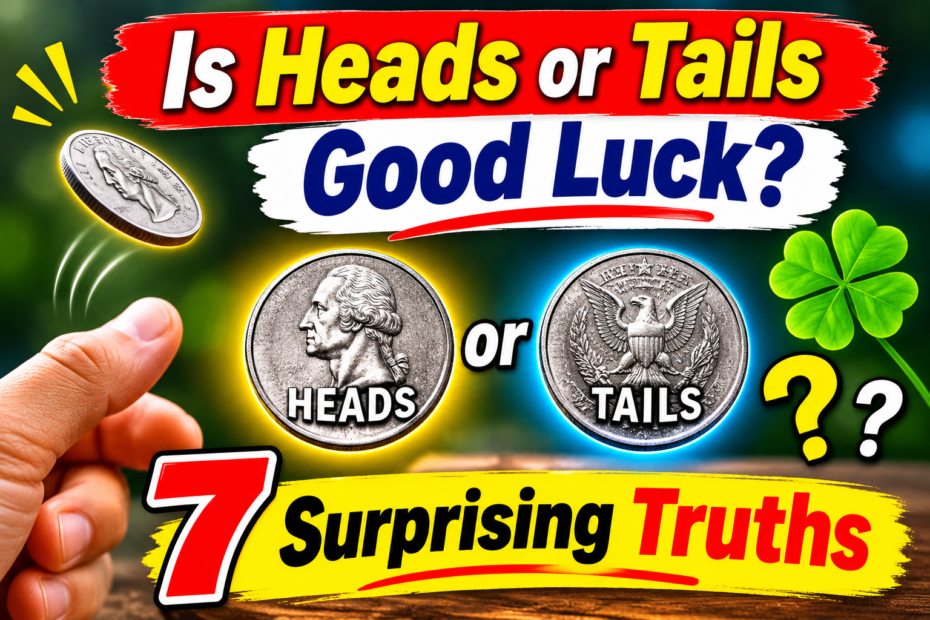
Is heads or tails good luck? No. On a fair coin, heads and tails each land about 50% of the time, so neither side is luckier, not even on a quarter. Heads only feels lucky because of old penny superstitions and the positive way we talk about it, not because of any real advantage.
Here is the short version of why. A fair coin has no memory, no favorite side, and no idea what you called. The only real-world nudge is a tiny physical bias of around 51% toward the side that starts facing up, and that has nothing to do with luck. The “lucky” feeling comes from folklore, language, and the way we remember wins. The sections below explain each of these one by one, so you can decide how much weight to give the superstition.
You have probably heard someone say “heads is lucky” while digging through a pocket for change. Maybe you picked up a penny and checked which side faced up before deciding whether to keep it. So is heads or tails good luck for real, or is it just something people repeat? Below we’ll look at where the idea comes from, what the numbers say, and how to think about it the next time a coin decides something for you. You can also try a free online coin flip while you read.
Key takeaways
- The honest answer to is heads or tails good luck is no: a fair coin gives both sides the same 50% chance.
- “Lucky” heads or tails is a belief, not a measurable effect.
- Folk sayings usually call a heads-up penny lucky and a tails-up penny unlucky.
- Heads sounds positive, and that word choice shapes how we feel about it.
- Your call (heads or tails) does not change the result.
- The small real-world bias in a toss comes from physics, not luck.
- Past flips do not affect the next one, so no side is ever “due.”
Is Heads or Tails Good Luck? What Most People Believe
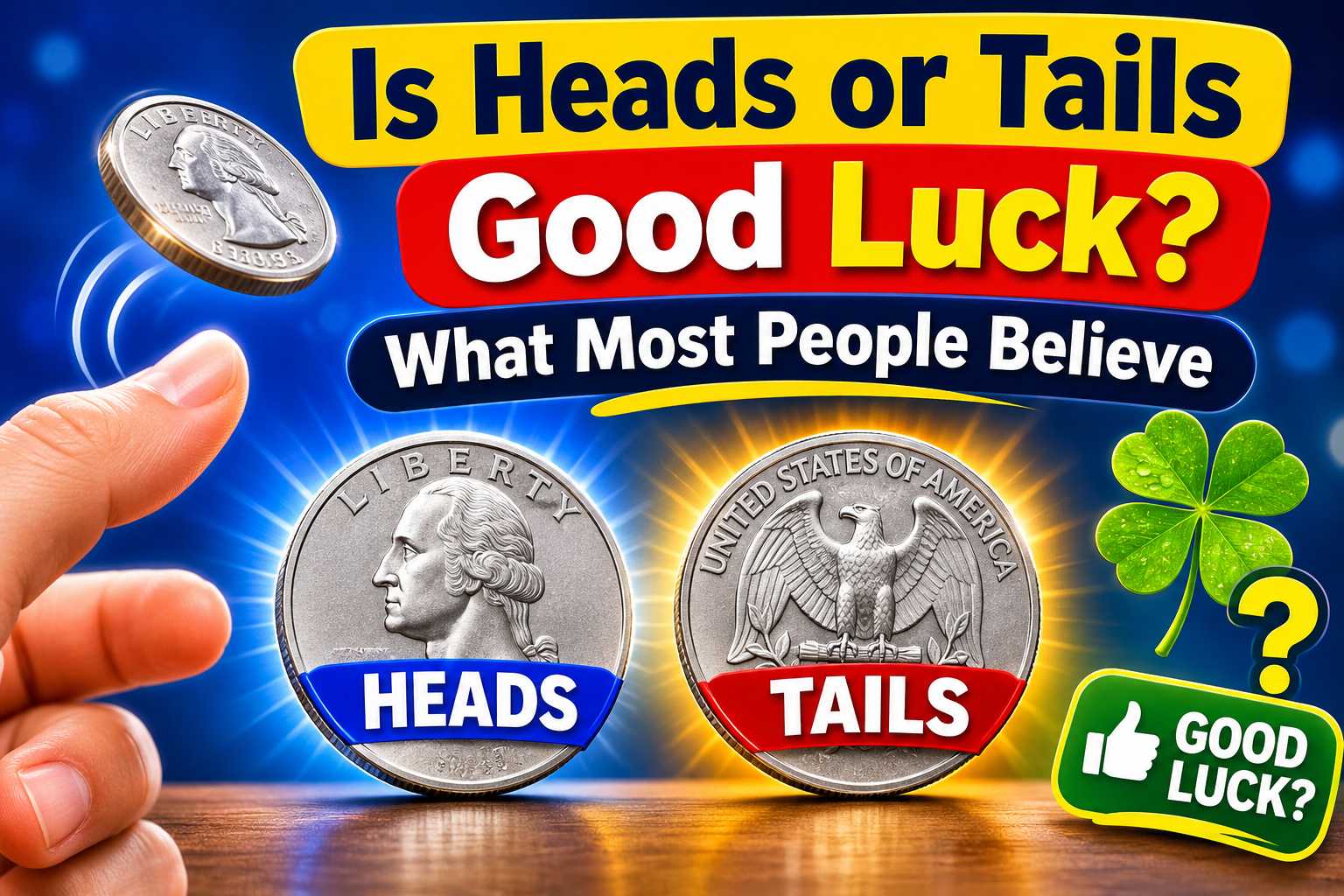
Ask ten people “is heads or tails good luck?” and you will usually get a split answer, but a pattern shows up. Most lean toward heads. It sounds positive, it feels like the “front” of the coin, and it shows a face, which people tend to read as a friendly sign.
Tails picks up a slightly gloomier reputation. People joke that “tails never fails,” but they also say “heads I win, tails you lose” without thinking twice. The words we use quietly tilt our feelings.
So is heads or tails more lucky? Culturally, heads gets the vote. Mathematically, it gets nothing extra. The belief is real. The effect is not.
Which Is Lucky, Heads or Tails? What the Math Says
A fair coin has two sides and two outcomes, so each side has a probability of 1 in 2, or 50%. That holds whether you are tossing a quarter at the kitchen table or watching a referee start a match. The general idea is explained well on the Wikipedia page for coin flipping, and our guide on why a coin toss is 50/50 walks through it step by step. Put simply, when you ask is heads or tails good luck, the math answers with a flat 50/50.
There is one small footnote. A well-known paper by Diaconis, Holmes and Montgomery found that a coin tends to land on the same side it started on slightly more often, around 51% of the time, when flipped by hand in the usual way. A later experiment with more than 350,000 flips, published on arXiv, found the same small same-side tendency. That comes from how the coin spins in the air, not from one face being lucky. If your friend starts the coin heads-up and you call heads, the gap is so small that nobody could feel it in a handful of tosses. We dig into this in is a coin flip really 50/50.
So when someone asks which is lucky, heads or tails, the honest answer is neither one. The only edge is so small it is almost invisible.
Is Heads or Tails Good Luck on a Quarter?
This is the question many people really mean. A quarter is the coin most of us flip, and it has a clear “heads” side (the portrait) and a clear “tails” side (the design on the back).
So is heads or tails good luck on a quarter? Still no. A normal US quarter is balanced well enough that heads and tails land with practically equal frequency. The portrait side carries a bit more detail than the back, but not enough to change how the coin falls in any meaningful way. For a closer look at the two sides, see heads vs tails on a coin.
Where luck sneaks in is the quarter you find. Spotting one on the sidewalk and seeing it face up feels like a tiny win. That little lift in your mood is the lucky part. The coin itself has no say in it.
Is Heads Lucky or Tails in Old Superstitions?
Folk beliefs about coins are older than most of the rules we follow today. The best known one comes from the penny: find one heads-up and good luck follows. Find one tails-up, and the saying goes that you should leave it for someone else, or flip it over before passing it on.
Different regions tell the story a little differently, and these sayings are folklore, not documented fact. In folklore, is heads or tails good luck depends on who is telling the story, but the shape of the belief is the same almost everywhere: the face side is the lucky side.
Coins also show up in rituals, such as tossing one into a fountain for a wish or keeping a “lucky coin” in a wallet. People usually pick the heads side for the same reason, because it looks like a face looking back at you. If you want to see how the two sides are used in a simple call, our heads or tails meaning and rules page covers the basics.
Is Tails Ever the Lucky Side?
Here is where it gets interesting. Tails is not unlucky everywhere. In plenty of casual games and sayings, tails is simply the “other” choice, and nobody treats it as bad news.
Some people even prefer it. Pick tails, win the toss, and you suddenly have a story: “tails has always been my side.” That story feels just as real as the heads one. Ask a lifelong tails fan is heads or tails good luck, and the answer flips completely. A person who loses three tosses in a row on heads may swear off it for life and call tails their lucky pick.
So when you ask whether tails or heads is good luck, the answer depends on who you ask and what happened to them last. It is personal, and personal is not the same as true. If you ever wonder whether a long run changes things, is tails due after many heads explains why it does not.
Why Heads Feels Luckier Than Tails
If neither side is lucky, why does heads feel better? A few simple reasons explain it, and together they are why the answer to is heads or tails good luck feels like “yes” even though it is “no.”
Words shape feelings. “Heads up” sounds positive. “Tails” can sound like the end of something. People carry that tone straight into how they think about luck.
We remember wins. If you called heads three times and won twice, you remember the wins, and the story “heads is lucky for me” starts to feel true. Psychologists call this confirmation bias.
Streaks look meaningful. Random results do produce streaks, like four heads in a row. Our brains want to explain them, which is closely tied to the gambler’s fallacy.
Tradition is persuasive. When your grandparents, friends and a few movies all repeat the same idea, it starts to feel like common knowledge.
Does Choosing Heads or Tails Change Your Chances?
Short answer: no. Picking heads or tails gives you the same 50% shot. The coin has no memory of your call and no idea which side you prefer, so your pick does not change the answer to is heads or tails good luck either. If you are curious about the “streak” side of this, does heads make tails more likely covers it.
Still, many people like having a method for the call. A few habits make the choice feel less random, even though they do not change the math:
- Go with the side that makes you feel confident. Feeling calm helps more than you would think.
- Do not switch just because the last toss went the other way.
- Stay consistent across a series of tosses, which keeps the game fair for everyone.
For a few practical pointers, how to call heads or tails is a good short read.
Is Heads or Tails Good Luck? Quick Comparison
| Question | Heads | Tails |
| Chance on a fair coin | 50% | 50% |
| Folk reputation | Lucky, positive | Unlucky or neutral |
| Heads-up/tails-up penny saying | Keep it | Leave it or flip it |
| Slight real-world bias | Only if it starts heads-up | Only if it starts tails-up |
| Proven luck effect | None | None |
How to Test the “Lucky Side” Idea Yourself
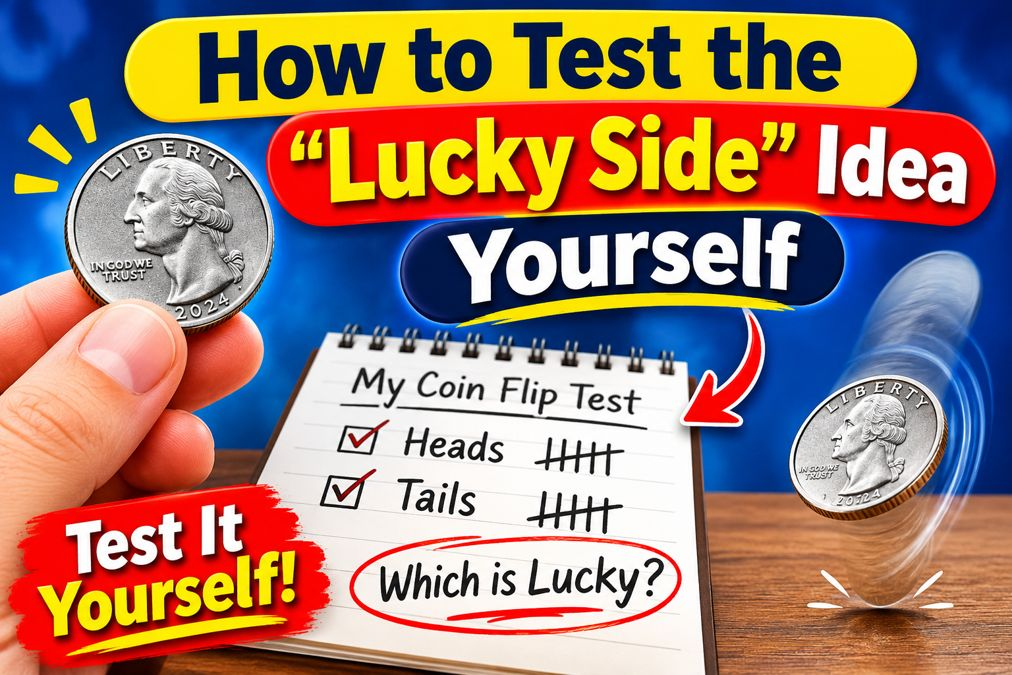
Testing is heads or tails good luck takes about five minutes. Try this quick experiment:
- Pick a side, heads or tails, and write it down.
- Flip a coin 50 times, by hand or with the free online coin flip tool.
- Count how many times your side came up.
- Repeat the test with the other side.
You will probably see numbers hovering around 25 out of 50, sometimes a bit higher, sometimes lower. That is normal. Over many more flips, the totals settle close to half. Nobody wins more because of the side they chose. If you like the numbers, the coin flip 50 percent chance explanation goes deeper.
Final Thoughts
So, is heads or tails good luck? The plain answer is no. Heads and tails are equal on a fair coin, and the “lucky” side is a mix of folklore, language and memory. That does not make the belief silly. A lucky coin in your pocket can calm your nerves, and a small ritual can make a decision feel lighter.
Just remember that the coin itself does not pick favorites, and that is the real answer to is heads or tails good luck. To see it for yourself, flip a coin online now and watch how evenly it falls. For more, browse the coin flip blog, and if you like decisions made simple, try the yes or no coin flip.
Is heads or tails good luck?
Neither side is truly lucky. A fair coin lands heads or tails about half the time. Many folk beliefs treat heads as the lucky face, but that is tradition, not evidence.
Is heads or tails good luck before a big game or decision?
No. Whether it is a sports toss or a personal choice, both sides have the same chance. If a certain side calms your nerves, go with it, but know the coin is not helping you.
Is heads or tails lucky on a quarter?
No. A US quarter is balanced well enough that heads and tails come up with nearly equal odds. Any feeling of luck comes from the moment or the story, not the coin.
Which is lucky, heads or tails, when you find a penny?
In common folk sayings, a heads-up penny means good luck, and a tails-up penny is better left alone or flipped over. It is a superstition passed down through families, with no scientific backing.
Is heads or tails more lucky for the person who calls first?
No. Calling first gives no advantage. The coin does not know who called what, so both calls have the same chance.
Does a coin land on heads more often than tails?
Not in any way you would notice. Research shows a very small tendency for a coin to land on the side it started on, around 51%, but that does not make heads or tails luckier.
Is there a free way to flip a coin online?
Yes. Our free online coin flip gives you a fair heads or tails result in one click, which is handy when you want a quick, unbiased answer.

Related Articles

Is Heads or Tails More Likely? 7 Proven Facts
Is heads or tails more likely? No. On a fair coin, heads and tails each have a 50% chance, so neither wins more over time. The…
Flip a Coin 10 Times: What to Expect from 10, 20, 30 and 50 Flips
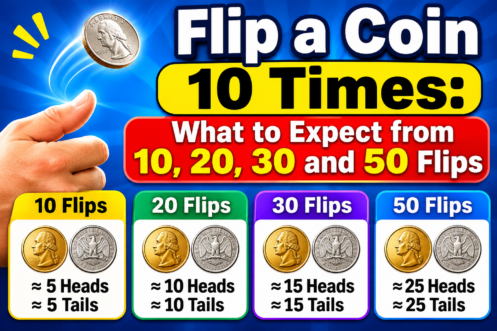
If you flip a coin 10 times, you’ll most often land on about 5 heads, but anything from 3 to 7 heads is completely normal. That…
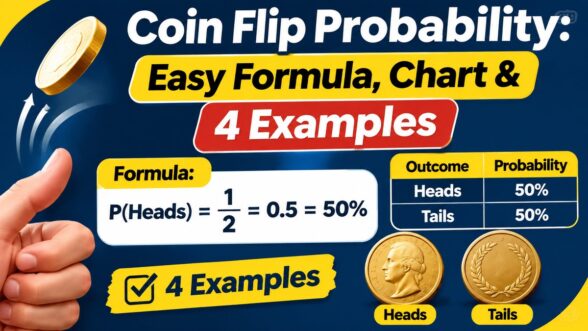
Coin Flip Probability: Easy Formula, Chart & 4 Examples
Ask ten people about coin flip probability and nine will say “fifty-fifty” without blinking. They’re right. A fair coin lands on heads 1/2 of the time…
Need a Quick Decision?
Flip a coin and let chance decide — instantly, honestly, and for free.
Flip a Coin