
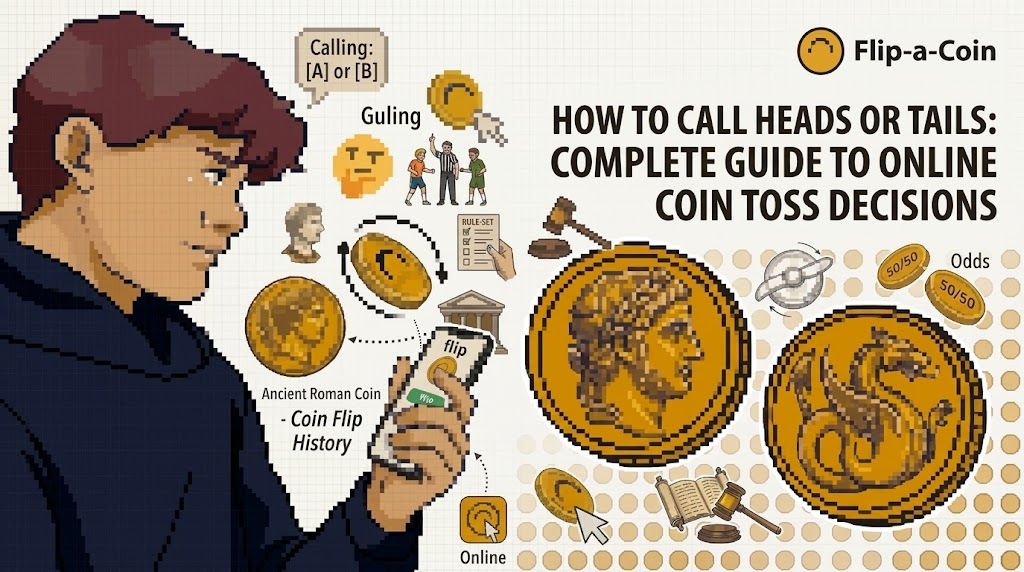
How to Call Heads or Tails: Complete Guide to Online Coin Toss Decisions
 12 min read
In this article
Some decisions are small but surprisingly hard: who picks the movie, who serves first, which route to take. That is why people have used coin tosses for centuries. A coin does not take sides, and the whole thing is over in a few seconds.
If you have ever wondered how to call heads or tails the right way, the answer is simpler than most people expect, but a few small rules keep the toss fair. This guide covers what to say, when to say it, how cricket captains handle the toss, and whether one side has an edge. It also explains how an online coin flip tool works. With tools like Flip-a-Coin.us, anyone can run a quick and fair virtual coin toss without needing a physical coin, and you can use it from your phone in a few seconds.
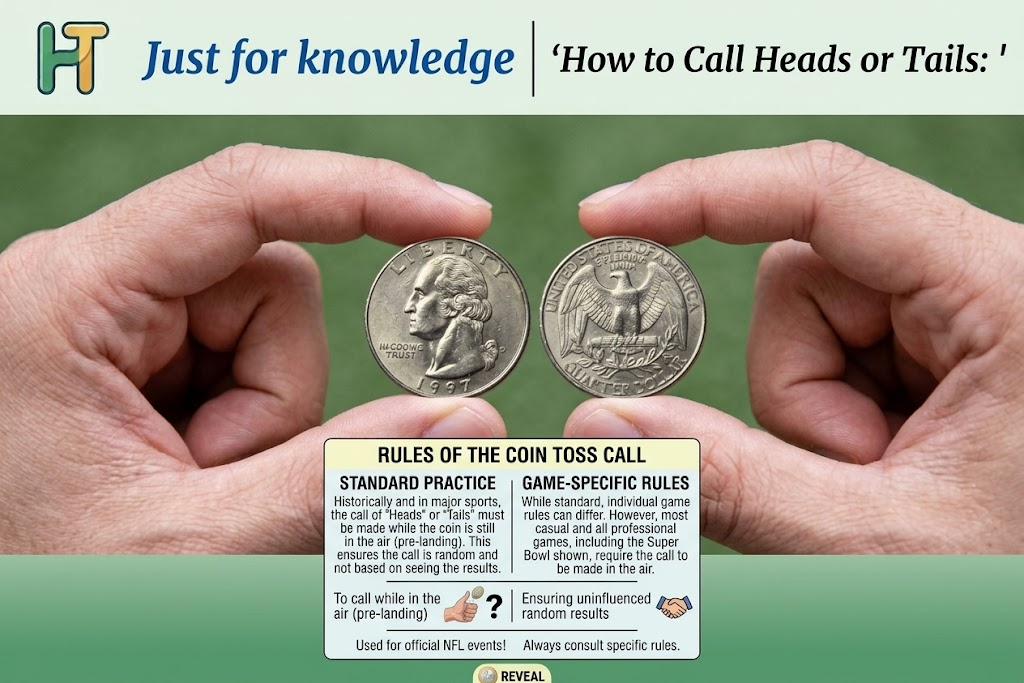
What Does Calling Heads or Tails Mean?
Calling heads or tails means announcing which side of the coin you are betting on before you find out the result. If the coin lands showing your side, you win the toss. If not, the other person does.
The habit is old. Ancient Romans played a version called “navia aut caput,” or “ship or head,” named after the images on their coins (read the history of coin flipping on Wikipedia). The idea has barely changed since: two sides, two choices, one neutral result.
The call matters because it locks in your choice. Without it, someone could pick the winning side after the coin lands, and nobody would trust the outcome. That is also why a heads or tails coin flip online still follows the same logic: you decide first, then the result appears.
If you are wondering what to say when calling heads or tails, keep it short and obvious. “Heads” or “tails” is enough. Clear wording prevents arguments later.
How to Call Heads or Tails Correctly?
To call heads or tails, choose one side before the coin is flipped and clearly announce your choice. After the coin lands, compare the result with your prediction.
Here is the process step by step:
- Choose heads or tails. Pick whichever side you like. The choice does not change your odds.
- Announce your choice clearly. Say it out loud so everyone hears it. For example: “I call heads” or “I choose tails.”
- Flip the coin. Toss it so it spins in the air and lands in the open.
- Check the result. Look at the side facing up. If it matches your call, you win.
This is also how to call heads or tails in a game. In a board game, you might call to decide who moves first. In a friendly football match, one captain calls while the other flips. The only rule that really matters is that the call comes before the result.
A quick tip: if you are the one flipping, let the other person call. It removes any suspicion that you chose a side to suit how you planned to throw.
How Does an Online Heads or Tails Generator Work?
An online heads or tails generator replaces the physical coin with a computer program. When you press the button, the program picks one of two outcomes with equal chances, then shows the result, usually with a coin animation.
Under the hood, most tools use a random number generator. The program produces a number, and the tool maps one range of numbers to heads and the rest to tails. Software generators are typically pseudo-random, which means they follow a mathematical formula designed to produce results that are statistically unpredictable. For everyday choices, that is more than fair enough. If you are curious about the science of randomness, the National Institute of Standards and Technology (NIST) publishes extensive material on random number generation.
On Flip-a-Coin.us, the process is simple: you open the page, call your side, and tap the coin. Each flip is independent, so the last result has no effect on the next. A good heads or tails online call generator should be transparent about this and should not remember or “balance out” previous flips. You can read more on our How It Works page.
Flip a Coin Call Heads or Tails Online: Using Virtual Coin Toss Tools
When you need to flip a coin and call heads or tails online, a virtual coin toss is often the easier option. Here is why people choose it:
- No physical coin needed. Many of us rarely carry cash or change these days.
- Instant results. There is no waiting for a coin to settle, and no chasing one that rolled under the sofa.
- Mobile accessibility. The tool works on phones, tablets, and laptops, at home or on the go.
- Easy for remote groups. Friends on a video call can watch the same screen and agree on the result.
Try a quick virtual toss using Flip-a-Coin.us whenever you need a fair decision.
How to Decide Heads or Tails Before Flipping a Coin?
This is a question many people overthink. In truth, with a fair coin there is no wrong choice. Still, here are some practical ways to decide.
- Personal preference. Some people always pick heads because it feels lucky. That is fine.
- Random choice. Let the other person choose first, or use a quick rule such as the youngest player picks.
- Game situations. In sports, the rulebook or the official usually decides who calls.
- Decision psychology. Here is something interesting: when the coin is in the air, many people discover what they were hoping for. If you feel disappointed by the result, that is useful information about your real preference.
The key habit is to settle the heads or tails call before flipping the coin, and to agree on what each side means (for example, heads means pizza, tails means tacos). If you need more than two options, a random choice generator can help you move beyond a coin.
Can You Call Heads or Tails Before the Coin Lands?
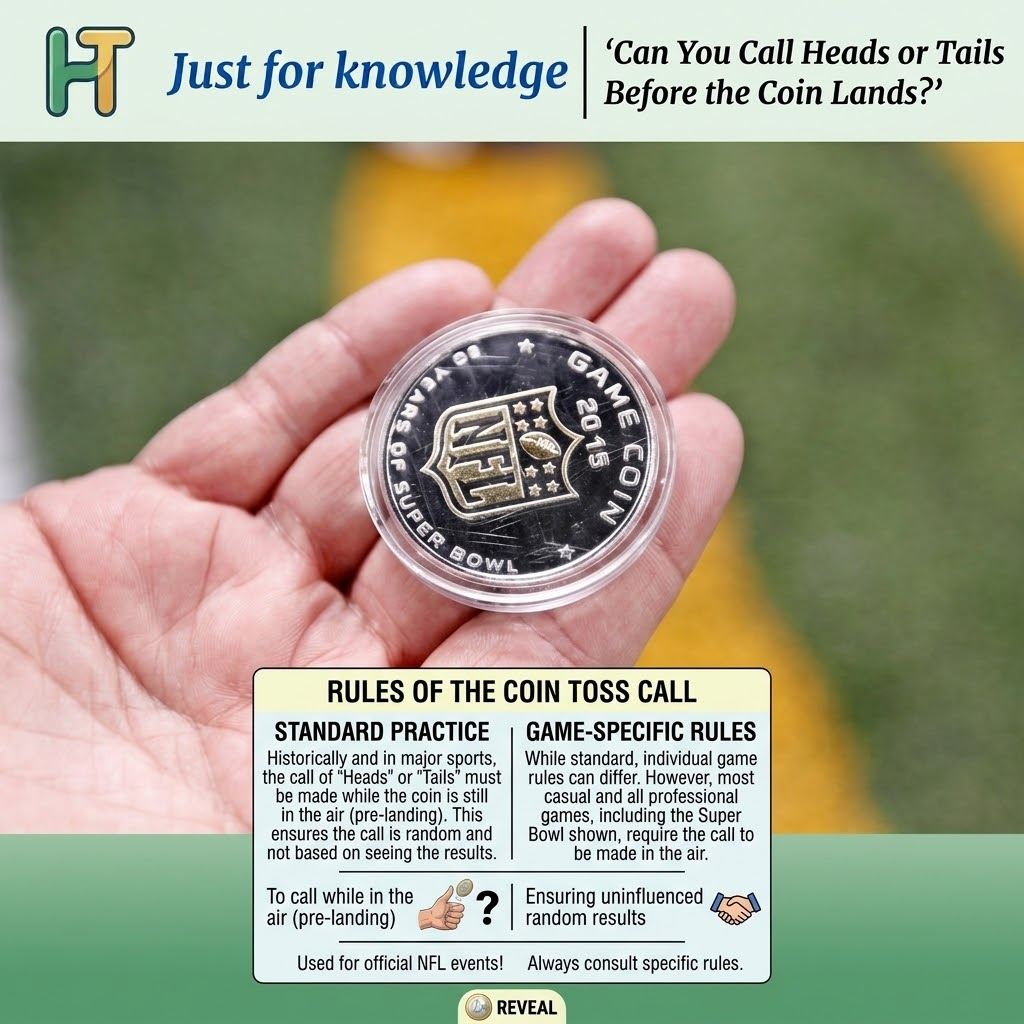
Yes. Traditional rules require the caller to choose before the result is revealed.
Timing is the whole point. If the call came after the coin landed, anyone could claim the winning side, so the toss would no longer be fair.
There are two common versions of when to call:
- Before the flip: common in casual games, school activities, and quick decisions.
- While the coin is in the air: used in some formal settings, including cricket, where the visiting captain calls as the coin spins.
Either way, you cannot change your call once the result can be seen. That protects against cheating, keeps competition fair, and prevents the “best two out of three” argument that follows an unfair toss. If you are wondering whether you can call heads or tails before the coin lands, the answer is simple: you must.
Cricket Toss: Who Calls Heads or Tails?
In cricket, the toss decides which team chooses to bat or bowl first, and that can influence the whole match. A cloudy morning might favor bowling first, while a dry pitch might favor batting.
So, in cricket, who calls heads or tails? In most matches, the home captain flips the coin and the visiting captain calls it. The toss usually happens shortly before the start of play, often with the match referee present.
The process looks like this:
- Both captains walk out to the middle.
- The home captain tosses the coin.
- The visiting captain calls heads or tails as it spins.
- The winning captain decides whether to bat or bowl.
Procedures can differ slightly between competitions and formats, particularly at neutral venues, so it is worth checking the playing conditions for the tournament you follow. The International Cricket Council (ICC) is the best place to look for official rules and regulations.
Heads vs Tails: Is One Side More Likely to Win?
For practical purposes, no. A fair coin has two sides, each with an equal chance of landing face up, so heads and tails are each 50%. If you want to read the theory behind this, Britannica has a good overview of probability theory, and Math Is Fun explains probability in beginner-friendly terms.
Two ideas are worth remembering:
- Each flip is independent. Five heads in a row does not make tails more likely next time.
- Streaks are normal. Over many flips, runs of the same side appear naturally.
A well-known study of hand-flipped coins found a very small tendency for the coin to land on the same side it started on, roughly 51% rather than 50%. That is far too small to matter in everyday decisions, but it shows why neutral methods, like calling first or using a digital tool, are a sensible habit. Curious about the numbers? Run multiple flips with our coin flip tool and see how the results spread.
| Choice | Chance on a fair coin |
| Heads | 50% |
| Tails | 50% |
Popular Situations Where People Use Heads or Tails
The coin toss shows up in more places than you might expect:
- Sports games: deciding kickoff, serve, or who bats first.
- Board games: choosing who goes first, or playing a quick heads or tails game between turns.
- Family decisions: movie night, chores, or who gets the front seat.
- Classroom activities: teaching probability or choosing a volunteer.
- Random selections: picking between two options when neither is clearly better.
- Breaking ties: settling a draw when a fair result is needed.
Why Use an Online Random Heads or Tails Tool?
A physical coin is great when you have one. An online tool is better when you do not, and it adds a few advantages of its own:
- Fast decisions: one tap and you have a result.
- No physical coin required: useful when you are traveling, at work, or on a call.
- Available anytime: it works on any device with a browser.
- Transparent results: a good heads or tails random call tool treats every flip as independent and does not favor either side.
If you want a quick random decision maker for everyday choices, an online tool is often the simplest option.
| Method | Best For | Speed |
| Physical Coin Toss | Traditional games | Fast |
| Online Coin Toss | Digital decisions | Instant |
| Random Generator | Quick choices | Instant |
How do you call heads or tails?
To call heads or tails, choose one side before the coin is flipped and clearly announce your choice, such as “I call heads.” After the coin lands, compare the visible side with your call. If they match, you win the toss. The call must come before the result is revealed so the outcome stays fair.
What should you say when calling heads or tails?
Keep it short and clear: “I call heads” or “I choose tails.” Say it out loud before the coin lands so the other person hears it. In organized games, an official may repeat your call back to confirm it. Avoid changing your answer once the flip has started.
Is an online coin toss really random?I
Yes, for everyday decisions. Online coin toss tools use a random algorithm to pick heads or tails with equal chances, so each result is independent of the last. Most are software-based rather than physical flips, which is more than fair enough for games, classroom use, and quick choices.
Who calls heads or tails in cricket?
In most cricket matches, the home captain tosses the coin and the visiting captain calls heads or tails. The captain who wins the toss chooses whether to bat or bowl first. Exact procedures can vary by competition, so check the playing conditions of the tournament you are following.
Can I flip a coin online?
Yes. You can flip a coin online at https://flip-a-coin.us/ without needing a physical coin. Open the page, call heads or tails, and tap the coin for an instant random result. It works on phones, tablets, and computers, so you can settle a decision anywhere in seconds.
Can you call heads or tails before the coin lands?
Yes. The call must be made before the result is known. In casual play, call before the flip. In cricket, the caller announces while the coin is in the air. Either way, a call made after the coin lands does not count, because it opens the door to cheating and arguments.
Is heads or tails really 50/50?
A fair coin gives heads and tails an equal 50% chance on every flip. Each flip is independent, so earlier results do not change the next one. Real coins can have tiny physical biases, but they are too small to matter in everyday decisions.
Is it better to call heads or tails?
No side is better. On a fair coin, heads and tails have the same chance, so choose whichever you like. Always picking the same side or switching after a streak makes no difference to your odds.
How do you decide heads or tails before flipping a coin?
Pick the side you prefer, agree on a simple rule such as the youngest player choosing first, or let the other person choose. The choice does not change the odds, so the goal is simply to settle it clearly before the flip.
What happens if the coin lands on its edge or rolls away?
The flip does not count, and you flip again. This is rare, but it is a good idea to agree on the rule before you start, especially in games where the result matters. Still have questions? Visit our FAQ page.

Related Articles

Why Is It Called Heads or Tails? 7 Surprising Facts
Why is it called heads or tails? Because a coin’s two sides were pictured as opposite ends of a body: the front shows a head, usually…

Lucky Penny Heads or Tails? 7 Surprising Beliefs
Lucky penny heads or tails? Heads. According to the popular superstition, a penny found heads up is lucky and worth picking up, while a tails-up penny…

Spin a Coin: Ultimate 2026 Guide + Free Flip Tool
When you spin a coin on its edge, it often lands more on one side than the other, so spinning is usually less fair than flipping.…
Need a Quick Decision?
Flip a coin and let chance decide — instantly, honestly, and for free.
Flip a Coin