
Why Is It Called Heads or Tails? 7 Surprising Facts
 11 min read
Why is it called heads or tails? Because a coin’s two sides were pictured as opposite ends of a body: the front shows a head, usually a ruler’s portrait, and the back became the “tail.” The name grew out of older games like Rome’s “ship or head,” and one early printed use dates to 1684.
Here is the short version of the story. Coins have carried portraits for well over two thousand years, so one side naturally became “the head.” The other side, which was often a design, an animal, a building or a symbol, was simply the opposite end, so people called it the tail. Long before English speakers said “heads or tails,” Romans were tossing coins with a ship on one side, and the English were playing “cross and pile.” The modern phrase is what was left after centuries of small changes. Below, we go through each step, so you will know exactly why is it called heads or tails and which parts are solid history and which are just good guesses.
If you have ever flipped a coin to pick who goes first, you have said those two words without thinking about them. But why is it called heads or tails, and not front or back, or one of the many other pairs other languages use? That small question has a surprisingly interesting answer. You can also flip a coin online as you read.
Key takeaways
- The short answer to why is it called heads or tails is that the front has a “head” and the back is its opposite, the “tail.”
- The Romans played a coin game called “ship or head,” because their coins showed a ship and a head.
- The English once said “cross and pile,” which dates back to medieval times.
- One early printed use of “heads or tails” appears in a 1684 play by Thomas Otway.
- No single person invented the coin toss, and no one can name the exact first speaker.
- Other languages use their own pairs, such as “face or cross” in Spanish and “head or number” in German.
- “Tails” is not about an actual tail on the coin, but about being the opposite of heads.
Why Is It Called Heads or Tails? The Short Explanation
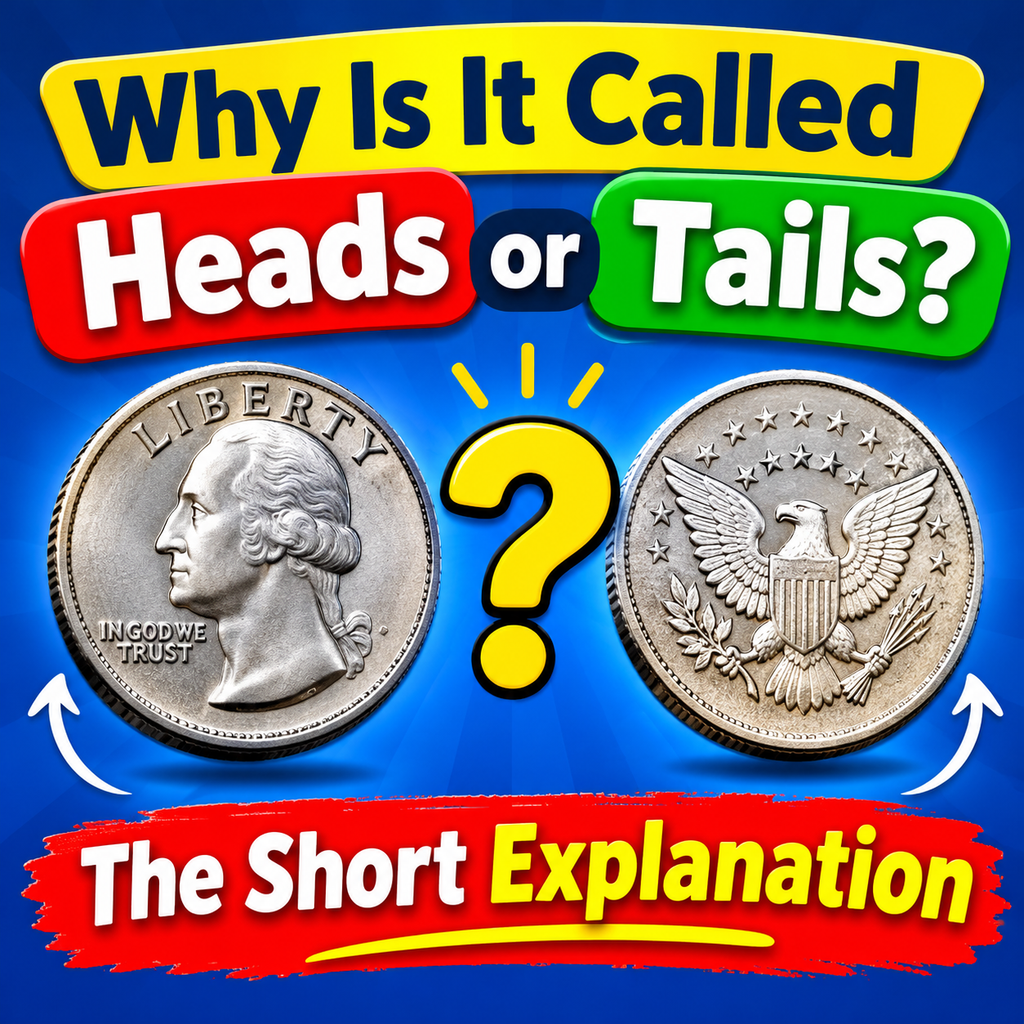
The simplest answer to why is it called heads or tails is this: heads and tails were treated as opposite parts of a body. A head sits at one end and a tail at the other, so the two words work as a natural pair. Wikipedia’s page on coin flipping gives the same basic explanation, noting that the phrase comes from heads and tails being seen as opposite body parts.
On most coins, the “head” side is the one with a portrait. Coin makers call that side the obverse. The other side is the reverse. You can read more about those terms on the obverse and reverse page. So when you call “heads,” you are really calling the portrait side, and “tails” is everything else.
What Does Heads or Tails Mean?
When people ask what does heads or tails mean, there are really two answers.
The first is the plain meaning: it is a way to choose between two options by tossing a coin, where one person calls a side and the coin decides. That is the heart of why is it called heads or tails today, because the two words are just labels for the only two outcomes.
The second meaning is the game. In many places, “heads or tails” is also a small party game for a room full of people. Everyone stands up, then each person puts a hand on their head to pick heads or on their hips to pick tails. After the coin lands, anyone who guessed wrong sits down. Our page on heads or tails meaning and rules covers the basic idea in more detail.
Where Did Heads or Tails Originate? The Roman Roots
To see why is it called heads or tails, we have to start in ancient Rome. Roman writers recorded a coin game called “navia aut caput,” which means “ship or head.” Some early Roman bronze coins carried the two-faced god Janus on one side and the front of a ship on the other, and later coins showed the emperor’s head.
So the idea of calling a side “head” is very old. The Romans did not say “tails,” but they already had the key pattern: one side is the head, and the other side is something else. Some historians believe the game could be even older, with ancient Greek children tossing a shell that was dark on one side and light on the other. That part is less certain, so it is best treated as a possible ancestor, not a proven origin.
The deeper roots of coin tossing are tied to belief. The oldest reason to toss a coin was to let chance, or the gods, decide. That is why the practice was seen as fair and almost sacred in many cultures.
Where Does the Saying Heads or Tails Come From? Cross and Pile
If you wonder where does the saying heads or tails come from in English, the answer goes through an older phrase. For centuries, English speakers called the game “cross and pile.” Many coins carried a cross on one side, and “pile” referred to the reverse. The usage goes back to medieval times.
Then, at some point, English speakers moved away from “cross and pile” and settled on “heads or tails.” One of the earliest known printed uses appears in Thomas Otway’s 1684 play The Atheist, where a character mentions boys gambling for farthings by going “heads or tails.” You can read about the playwright on the Thomas Otway page, and a short summary of the history is in this Provident Metals article. A 1684 date does not prove the phrase began then. It only means it was already in use by that time.
Who Invented Heads or Tails?
Here is the honest answer: nobody knows, and no single person did. The practice grew slowly out of games, rituals, and everyday decision-making. If you ask who invented heads or tails, the best you can say is that Roman coin games and English “cross and pile” are two of the earliest records we have.
That is also part of why is it called heads or tails today. The phrase was not invented in one moment. It was shaped by ordinary people who tossed coins, argued about the result, and passed the words on. A phrase like that spreads quietly, one conversation at a time.
Why Is It Called Heads or Tails and Not Something Else?
This is where it gets interesting. Why is it called heads or tails and not “front or back” or “face or cross”? Because the words that stuck were the ones people already understood.
A head is easy to picture, since portraits and faces were everywhere on coins. A tail is the natural opposite, and it is short, punchy, and easy to shout across a playground. Compared with “obverse or reverse,” the heads or tails pair is a lot simpler to say.
The word “tails” is also the part with the least certainty. The most common explanation is the body-parts idea, where a tail is simply the opposite end from the head. Other theories exist, but none has been proven, so it is wise to be careful with any source that sounds too sure. The tail on a coin is not an actual tail.
Heads or Tails Around the World
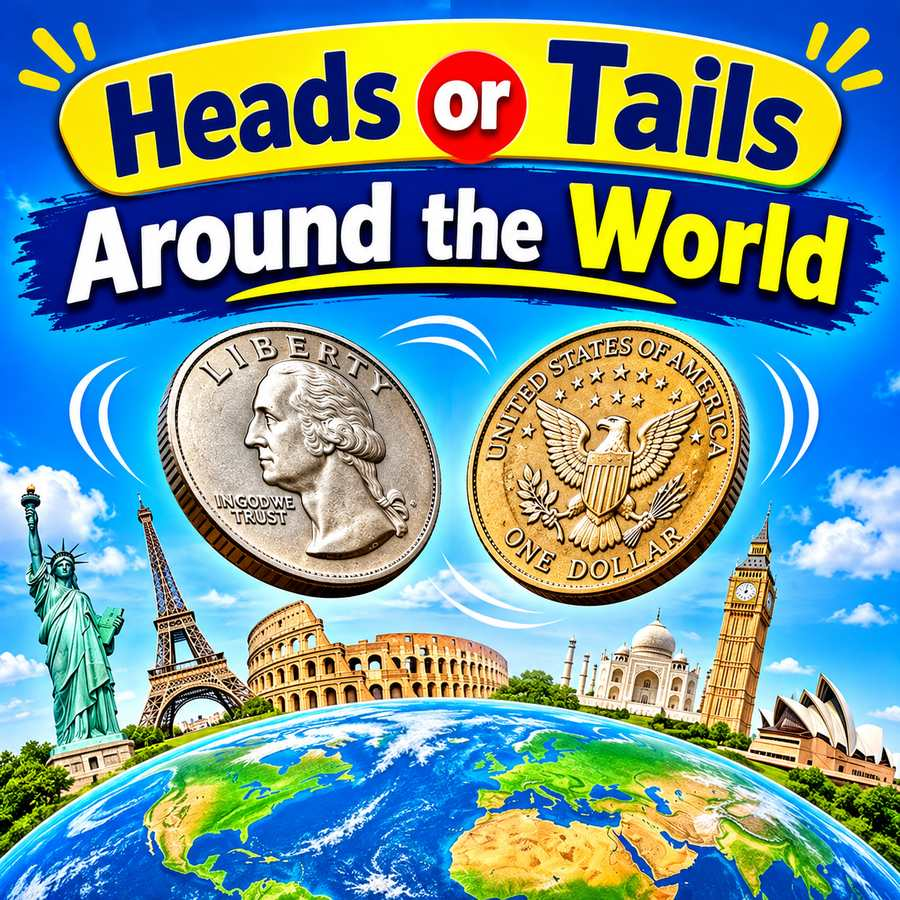
Different languages name the two sides differently, and that shows how flexible the idea is. According to Wikipedia’s coin flipping page:
- French: pile ou face (pile or face)
- Dutch: kop of munt (head or coin)
- Spanish: cara o cruz (face or cross)
- German: Kopf oder Zahl (head or number)
- Portuguese: cara ou coroa (face or crown)
- Polish: orzeł czy reszka (eagle or remainder, meaning change)
Notice that most of these use a head or a face for one side. That helps answer why is it called heads or tails in English, since the “head” half of the pair is nearly universal. The other half changes depending on what that country’s coins showed on the back, such as a cross, a number, or a crown.
Why Is It Called Heads or Tails? Quick Timeline
| Period | Name or event | What it tells us |
| Ancient Greece (possible) | Shell tossed with a dark and a light side | Early two-sided chance game |
| Ancient Rome | “Navia aut caput” (ship or head) | The “head” idea already exists |
| Medieval England | “Cross and pile” | English version of the game |
| 1684 | Thomas Otway’s The Atheist | One early printed “heads or tails” |
| Today | Heads or tails | Used worldwide in sport, games, and choices |
What Is Heads or Tails as a Game and a Decision Tool?
Beyond the name, what is heads or tails in daily life? It is probably the simplest tool people have for settling a tie. Sports use it to decide who kicks off or who bats first. Friends use it to pick a movie. Parents use it to settle who gets the front seat.
It works because a fair coin gives each side an equal chance. That is the same reason it keeps its place even in a world full of apps. If you want the reasoning behind that, see why a coin toss is 50/50 and is heads or tails more likely. If you are curious about the superstition side of the coin, there is also a guide to is heads or tails good luck and the lucky penny heads or tails belief.
Common Myths About the Name
A few ideas float around about why is it called heads or tails, and some of them are not well supported.
- Myth: the tail is a real tail. No. It is just the opposite end of the pair.
- Myth: one inventor named it. No single person has been identified.
- Myth: it has always been “heads or tails.” No. Earlier names like “ship or head” and “cross and pile” came first.
- Myth: every country uses the same words. No. Many languages use their own pairs.
If someone gives you a very confident, very specific origin story, treat it with a bit of caution. The real history is mostly a chain of small changes, and some links are missing.
How to Use Heads or Tails the Right Way
Now that you know why is it called heads or tails, here is a quick way to use it fairly:
- Decide who will call the side before the coin is flipped.
- Let the caller choose heads or tails out loud.
- Flip the coin so it spins in the air and lands clearly.
- Read the result and stick to it.
If you want a few extra tips, see how to call heads or tails and how a coin flip works. For a quick, fair result with no coin in your pocket, use our free online coin flip.
Final Thoughts
So, why is it called heads or tails? Because a coin has a front with a head and a back that became its opposite, the tail. The words were shaped by Roman ship-and-head games, English cross-and-pile, and centuries of ordinary people tossing coins to settle small things. No inventor, no single date, just a very old habit that stuck.
Next time you flip a coin, you will know that those two words carry a long history. To keep exploring, browse the coin flip blog, read about heads vs tails on a coin, or try our coin flip tool for a quick result any time.
Why is it called heads or tails?
Because the two sides of a coin were treated as opposite ends of a body. The front usually shows a head, such as a ruler’s portrait, and the back became the tail. The phrase developed from older games like “ship or head” and “cross and pile.”
What does heads or tails mean?
It means choosing between two outcomes by tossing a coin. One person calls heads or tails, and the side that lands face up decides the result. It is also the name of a simple group game.
Where did heads or tails originate?
The earliest clear roots are in ancient Rome, where people played “ship or head” with coins. The English later played “cross and pile,” and “heads or tails” appears in print by 1684.
Who invented heads or tails?
No single person did. It developed gradually from coin games in ancient and medieval times, and the modern phrase spread through everyday use.
Where does the saying heads or tails come from?
It comes from heads and tails being seen as opposite body parts, applied to the two sides of a coin. English speakers moved from “cross and pile” to “heads or tails” over time.
Why is it called tails if there is no tail on the coin?
Because “tails” is simply the opposite of “heads.” It names the back of the coin, not a real tail.
Where can I flip a coin online for free?
You can use our free online coin flip for an instant, fair heads or tails result.

Related Articles
Lucky Penny Heads or Tails? 7 Surprising Beliefs
Lucky penny heads or tails? Heads. According to the popular superstition, a penny found heads up is lucky and worth picking up, while a tails-up penny…

Spin a Coin: Ultimate 2026 Guide + Free Flip Tool
When you spin a coin on its edge, it often lands more on one side than the other, so spinning is usually less fair than flipping.…

Yes or No Coin Flip: Ultimate 2026 Guide + Free Tool
A yes or no coin flip means heads is yes and tails is no. You flip the coin once, and the side facing up gives your…
Need a Quick Decision?
Flip a coin and let chance decide — instantly, honestly, and for free.
Flip a Coin