
Yes or No Coin Flip: Ultimate 2026 Guide + Free Tool
 9 min read
In this article
- What Is a Yes or No Coin Flip?
- How Does a Yes or No Coin Flip Work: Heads Yes, Tails No
- How to Do a Yes or No Coin Flip Online (Step by Step)
- Is a Yes or No Coin Flip Fair?
- How to Ask a Good Question for a Yes or No Coin Flip
- Yes or No Coin Flip vs “Heads or Tails”
- Yes or No Tarot Coin Flip: What It Is (and Isn’t)
- When a Yes or No Coin Flip Is a Good Way to Decide
- When Not to Use a Yes or No Coin Flip
- Common Mistakes With a Yes or No Coin Flip
- Final Thoughts
A yes or no coin flip means heads is yes and tails is no. You flip the coin once, and the side facing up gives your answer. A fair coin gives each answer a 50% chance, which is why a yes or no coin flip is such a popular way to settle a quick decision. This guide shows you how to set one up, how to ask a good question and when to trust the result.
Want an answer right now? Open our free yes or no coin flip tool, tell yourself that heads is yes and tails is no, and tap the coin.
What Is a Yes or No Coin Flip?
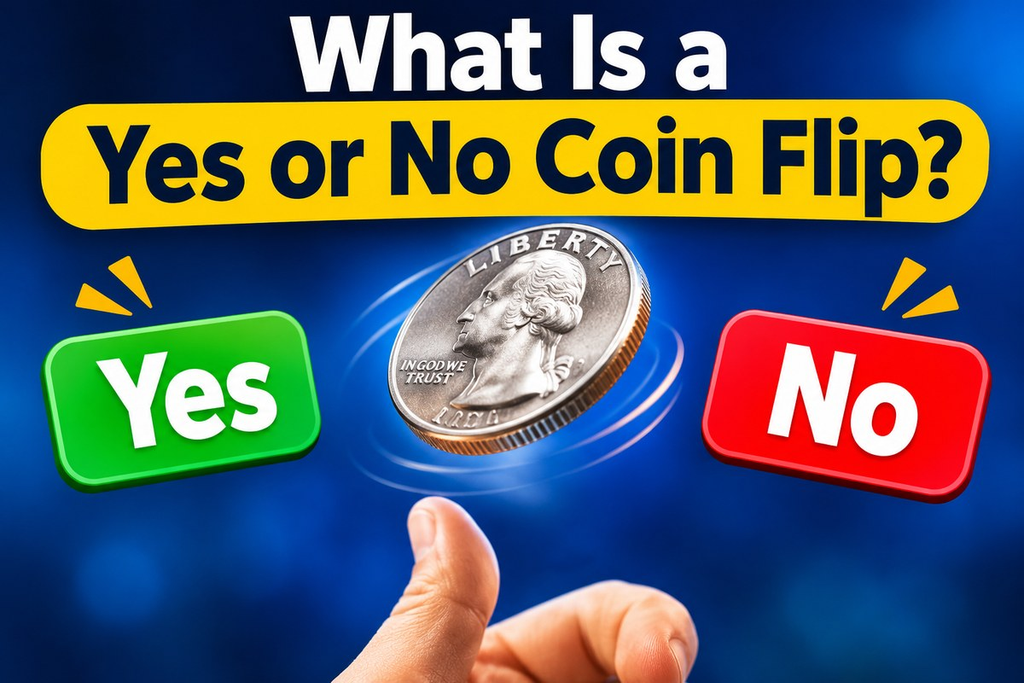
A yes or no coin flip is a normal coin toss where the two sides stand for two answers. Heads means yes, tails means no, and the coin does the deciding. It works best for simple questions that have only two possible answers.
People have tossed coins to settle things for a very long time, and Wikipedia’s page on coin flipping covers some of that history. A yes or no coin flip is the same old habit, aimed at a question instead of a choice between two options.
You’ll see it written in lots of ways: flip a coin yes or no, yes no coin flip, even yes or no coin toss. They all mean the same thing.
How Does a Yes or No Coin Flip Work: Heads Yes, Tails No
Before you flip, say it out loud: heads is yes, tails is no. This is the decide-first rule, and it matters more than anything else about a yes or no coin flip. If you decide what each side means after the coin lands, you’re not really flipping, you’re picking.
Here’s a simple example. You’re staring at the dessert menu. You ask: “Should I order the cheesecake?” Heads is yes, tails is no. You flip. Tails. No cheesecake, and no more dithering.
You can swap the labels if you like. Heads no and tails yes works just as well. All that matters is that you agree on it before the coin leaves your hand.
How to Do a Yes or No Coin Flip Online (Step by Step)
A yes or no coin flip online takes about five seconds. Here’s how it goes.
- Write your question so it has a clear yes or no answer.
- Decide the rule: heads yes, tails no.
- Open the coin flip tool.
- Tap the coin or press the Flip button.
- Read the result. It’s also announced for screen-reader users.
- Accept it. If you want to start again with a new question, press Reset.
Our tool is free, needs no sign-up and works on phones, tablets and computers. It doesn’t have a dedicated yes or no mode, so you set the meaning yourself, and a yes or no coin flip works exactly the same way. If you’d rather start from the main page, Flip-A-Coin.us works too.
Is a Yes or No Coin Flip Fair?
Yes, for everyday decisions. A fair coin gives heads and tails the same chance, 50% each, so a yes or no coin flip has no built-in lean towards yes or no. If you’d like the basics of equal chances, Khan Academy’s probability lessons explain them well, and our guide to you flip a coin what is p(heads) covers the single-flip chances in detail.
In the real world, a physical coin has a tiny quirk. A study by Persi Diaconis and colleagues, Dynamical Bias in the Coin Toss, found that a flipped coin tends to land on the side it started on. A much larger experiment, Fair coins tend to land on the same side they started, reported roughly 50.8% for that result. It’s a very small gap.
A digital flip doesn’t have that physical lean. Ours uses your browser’s Web Crypto API, a feature designed to produce strong, hard-to-predict random values. MDN explains how it works, and the W3C Web Crypto specification describes the standard. Our how it works page has the details.
One honest point. Fair doesn’t mean you’ll like the answer. It only means the coin isn’t on anyone’s side.
How to Ask a Good Question for a Yes or No Coin Flip
A yes or no coin flip only works when yes and no are real opposites. If the question is fuzzy, the answer will be too. Here’s the difference.
- Weak: “What should I do this weekend?” That’s not a yes or no question at all.
- Better: “Should I go to the market on Saturday?” Yes means go, no means stay home.
- Weak: “Should I text them or call them?” There are two options, but neither is a yes or a no.
- Better: “Should I call them tonight?” Yes means call, no means don’t.
Keep it to one question at a time. If you pack two questions into one, a single yes or no can’t answer both.
Yes or No Coin Flip vs “Heads or Tails”
It’s the same coin with different labels. A heads or tails flip asks “which side?” A yes or no coin flip asks “should I?” and uses the sides as answers. Our heads or tails page covers the classic version.
| Heads or tails | Yes or no coin flip | |
| The coin | Normal two-sided coin | Same coin |
| What heads means | Heads | Yes |
| What tails means | Tails | No |
| Typical use | Picking a side or who goes first | Answering a simple question |
| Agree first? | Yes | Yes |
Yes or No Tarot Coin Flip: What It Is (and Isn’t)
A yes or no tarot coin flip is a coin used the way some people use a quick tarot-style yes or no prompt. For some, it’s a bit of fun. For others, it’s a small ritual that helps them pause and think.
Here’s the honest part. A coin can’t predict the future, and neither can a flip dressed up as a ritual. The result of a yes or no coin flip is still just a 50/50 toss. If it’s a useful nudge to reflect on what you really want, that’s fine. Treat it as entertainment and a thinking aid, nothing more.
When a Yes or No Coin Flip Is a Good Way to Decide
A yes or no coin flip works best for small, low-stakes questions where either answer is fine. Here are some examples:
- Should I have dessert tonight?
- Should we watch another episode?
- Should I go for a walk now or later?
- Should I tidy up before the guests arrive?
- Should we order takeaway?
Here’s a tip many people find useful. Flip the coin, and notice how you feel about the result before you read it twice. If you feel relieved, that may be your answer. If you feel disappointed, you may already know what you wanted. It’s a thinking aid, not science, so use it lightly. Our coin toss page has more on how people use a coin to decide.
When Not to Use a Yes or No Coin Flip
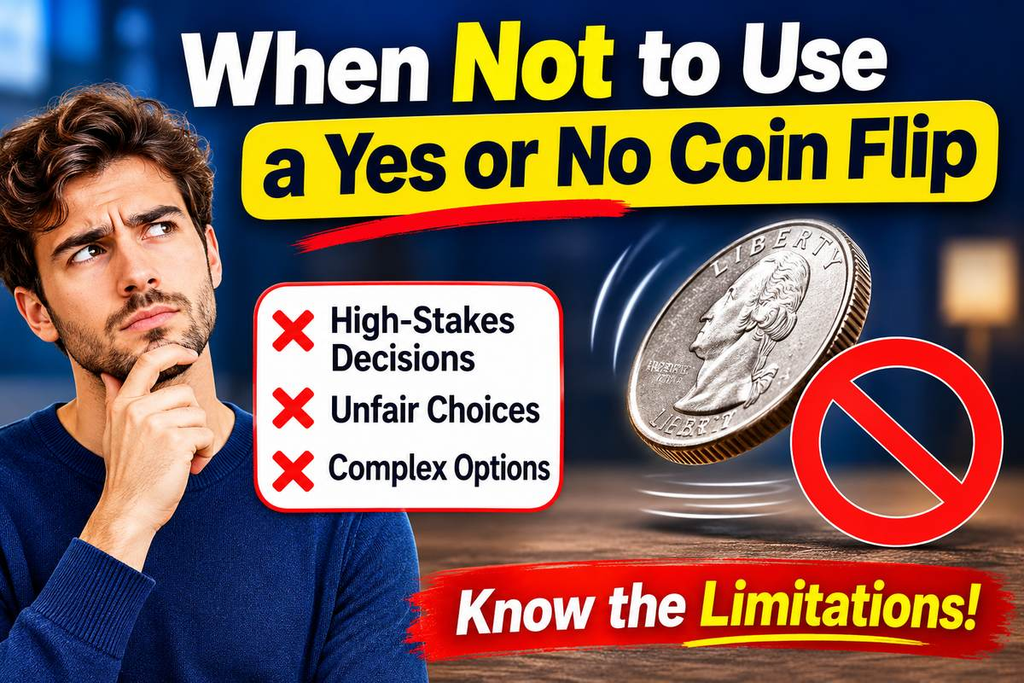
A coin is the wrong tool for big or serious decisions. Skip it for anything involving safety, health, money or other people’s wellbeing. Those choices deserve proper thought, good information and, where it makes sense, a conversation with someone you trust or a qualified professional.
A yes or no coin flip is a tie-breaker for the small stuff, not a decision-maker for the big stuff.
Common Mistakes With a Yes or No Coin Flip
Most arguments over a coin come from the same few slips.
- Flipping again until you get yes. If you re-flip every time you dislike the answer, the coin isn’t deciding anything.
- Not agreeing the sides first. Decide what heads and tails mean before you tap.
- Asking a question that isn’t really yes or no. A yes or no coin flip can’t pick between five options.
- Reading too much into a streak. Five yeses in a row don’t make the next flip more likely to be yes. Each flip is independent.
- Using it for huge decisions. Save the coin for choices where either outcome is fine.
If you’d also like to flip a physical coin cleanly, here’s our guide on how to flip a coin, and our heads and tails coin flip guide covers the basics of the game.
Final Thoughts
A yes or no coin flip is quick, fair and easy: heads is yes, tails is no, and you decide that before you flip. Ask a clear question, accept the answer, and keep it for decisions where either result is fine.
Ready to try a yes or no coin flip? Head to Flip-A-Coin.us, tap the coin, and let it settle things. If you have questions, our FAQ has more answers.
What is a yes or no coin flip?
A yes or no coin flip is a coin toss where heads means yes and tails means no. You flip once and the side facing up gives your answer. It’s a quick way to decide simple questions.
Which side of the coin is yes?
It’s up to you, but most people use heads for yes and tails for no. What matters is that you decide before you flip, so the coin makes the choice and you don’t.
Is a yes or no coin flip fair?
Yes. A fair coin gives heads and tails a 50% chance each, so a yes or no coin flip doesn’t lean towards either answer. A digital flip also has no physical bias.
Can I do a yes or no coin flip online for free?
Yes. Open a free coin flip tool, decide that heads is yes and tails is no, and tap the coin. Our tool needs no sign-up and works on any device.
Can a yes or no tarot coin flip predict the future?
No. A yes or no tarot coin flip is for fun or reflection. The coin gives a 50/50 result, and it can’t tell you what will happen. Use it as a prompt, not a prediction.
What if I don’t like the answer?
That’s useful to notice. If you feel disappointed by the result of a yes or no coin flip, you may already prefer the other answer. You’re free to follow that, because the coin is only a tie-breaker.
Should I flip again if I don’t like the result?
Not if you want a fair answer. Flipping until you get the result you want defeats the point of a yes or no coin flip. If you plan to re-flip, agree that rule before the first toss.
Is it okay to use a yes or no coin flip for big decisions?
It’s best for small, low-stakes choices. For serious matters like health, money or safety, take time to think and talk to someone you trust. A yes or no coin flip shouldn’t make those calls for you.

Related Articles
Why Is It Called Heads or Tails? 7 Surprising Facts
Why is it called heads or tails? Because a coin’s two sides were pictured as opposite ends of a body: the front shows a head, usually…
Lucky Penny Heads or Tails? 7 Surprising Beliefs
Lucky penny heads or tails? Heads. According to the popular superstition, a penny found heads up is lucky and worth picking up, while a tails-up penny…

Spin a Coin: Ultimate 2026 Guide + Free Flip Tool
When you spin a coin on its edge, it often lands more on one side than the other, so spinning is usually less fair than flipping.…
Need a Quick Decision?
Flip a coin and let chance decide — instantly, honestly, and for free.
Flip a Coin